|
|
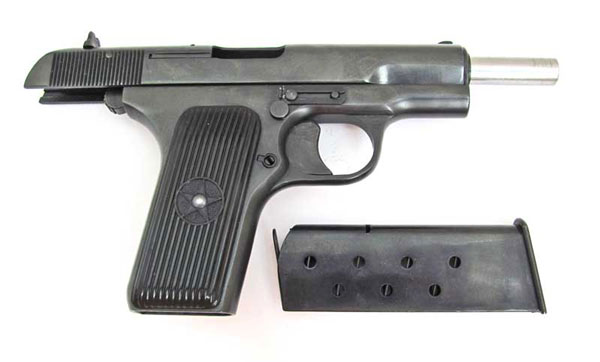
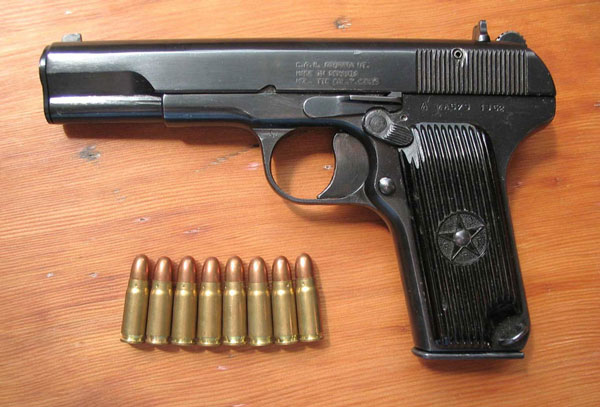
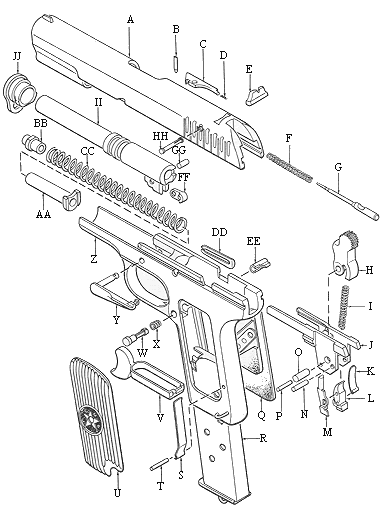
Detailed Disassembly and Reassembly of the Romanian Tokarev TTC PistolThe Romanian TTC is a copy of the famous (and a bit rare) Russian Tokarev TT-33. The Tokarev, chambered for the powerful 7.62x25 cartridge, replaced the strange and unusual Nagant revolver in 1931, and was itself replaced by the elegant little Makarov pistol in 1951. The TTC, or Tula Tokarev Cugir, was produced by the Cugir Arms Factory in Transylvania, and was used by the Romanian military from the early 1950s until the late 1990s. It has been abundant on the surplus market in the U.S., though the ammo is a bit dodgy these days, and it offers the collector some small consolation for the fact that the wonderful U.S. government won't let you buy a real Tokarev from the Russians. The Tokarev is similar to the John Browning 1911 in the barrel link and breech lock arrangement, the barrel bushing, and the slide lock. The trigger arrangement is also similar, but the trigger and bow are machined in one piece and the trigger bow acts directly on the sear rather than via the disconnector as in the 1911. Other features, including the magazine release, the firing pin, the extractor, and the hammer mechanism are different from the 1911. Disassembly is easy enough. The magazine is straightforward, so we won't deal with it here, and we won't remove the rear sight (E), the barrel link (FF), or the trigger spring retaining pin (T). In the following discussion, left, right, top, bottom, forward, rear, etc. are from the pistol's point of view. |
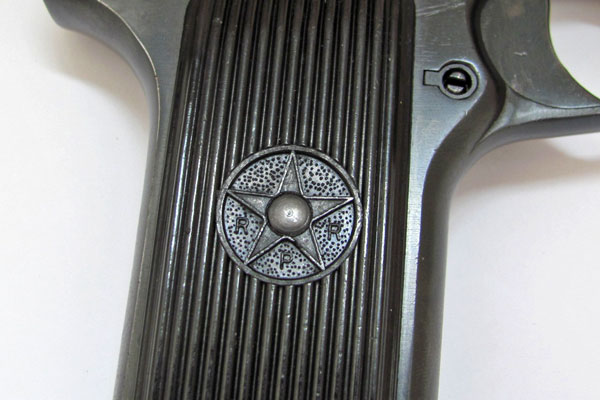
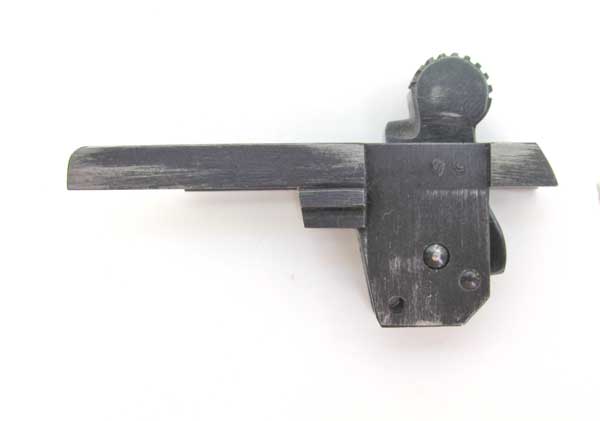
|
|
Remove the magazine and clear the chamber. |
|
|
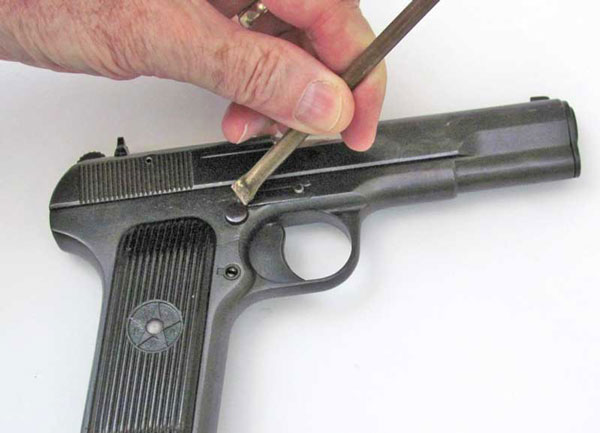
Close the slide and let the hammer down. We don't need to mess with the recoil spring plug or the barrel bushing to take the slide off. That's just nuts. Obviously, the recoil spring plug and barrel bushing aren't made for that. We do it this way: Press or tap the slide lock clip back far enough to release the slide lock. |
|
|
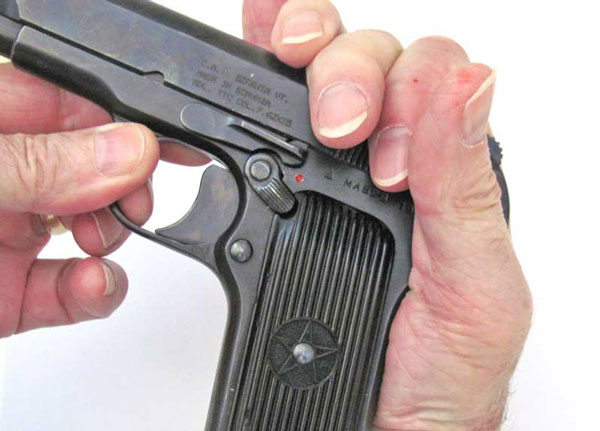
While pulling the slide slightly back to relieve pressure on the slide lock pin, press the slide lock from the right side and pull it out to the left. |
|
|
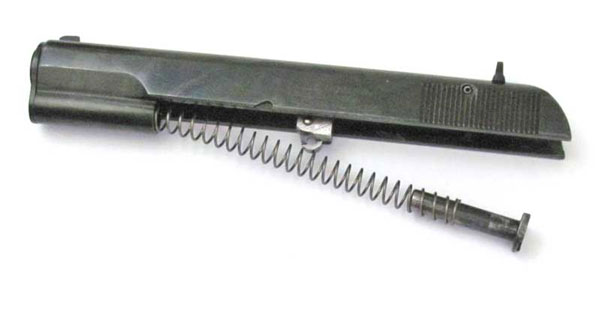
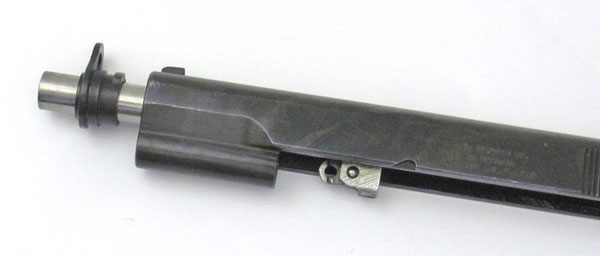
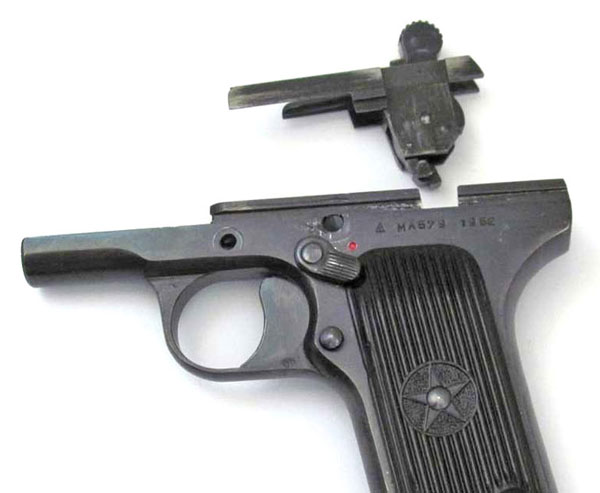
The recoil spring wants to jump out. Restrain it while removing the slide to the front. |
|
|
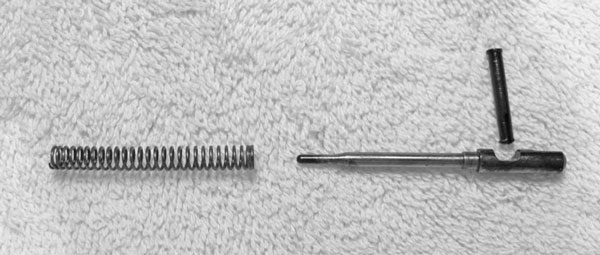
Remove the recoil spring, plug, and guide. Like the 1911, the concave side of the recoil spring guide goes against the barrel. |
|
|
Rotate the barrel bushing 180° and slide it out, tip the barrel link up, and remove the barrel by sliding it forward. |
|
|
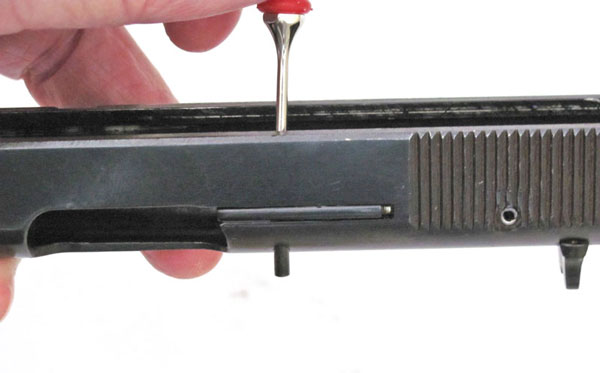
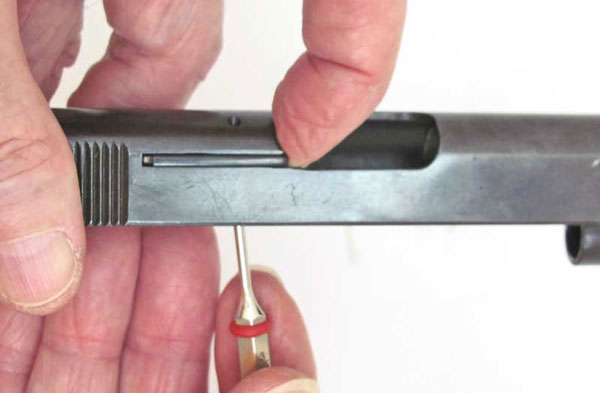
The extractor is removed by tapping the retaining pin from the bottom. |
|
|
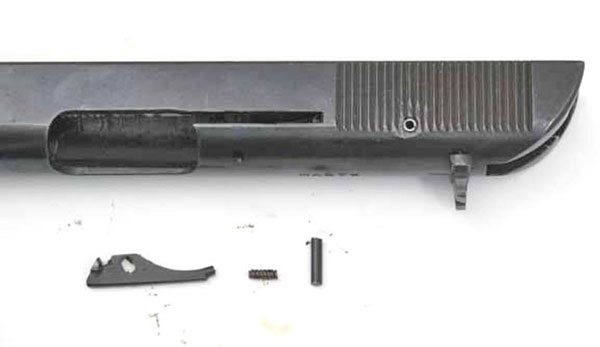
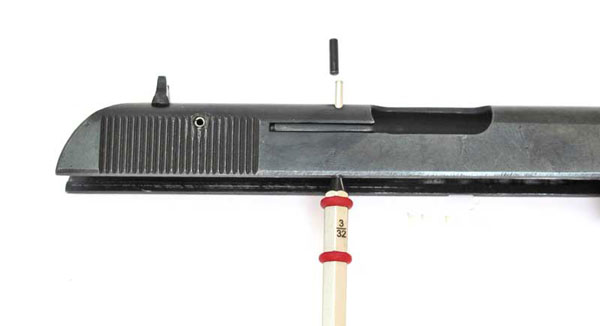
With the pin removed, slide the extractor forward to remove it. |
|
|
Fish out the tiny extractor spring from the slide. |
|
|
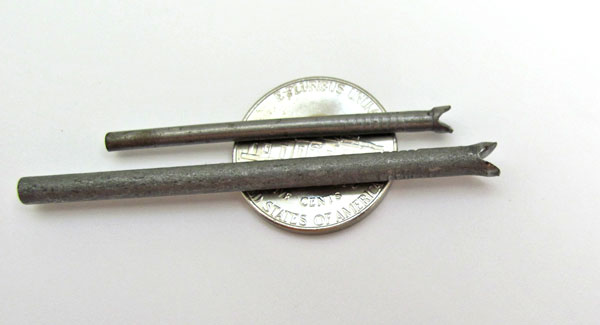
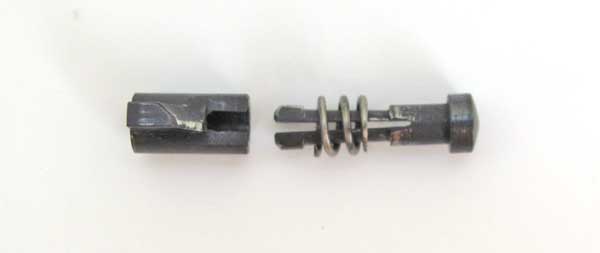
The Tokarev has two split pins—the firing pin retaining pin and the magazine release button. The split end locks onto a shoulder in the hole to hold the pin in place. This will be easy to see when you get one of them out. The split pins can be damaged by driving them out with an ordinary punch. To remove the split pins we make special tools by filing a "V" into the ends of appropriately-sized nails. The "V" compresses the sides of the split pin together, to release them from the shoulder. The tool is the same size as the end of the pin, but too large to pass through the hole—it only gets the split pin started. With this tool we can remove split pins without damage. |
|
|
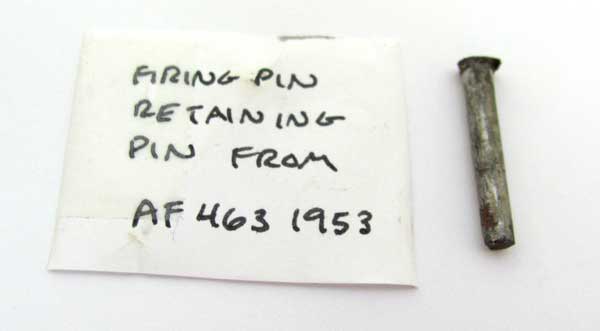
The firing pin retaining pin is the smaller of the two and is easily broken by soldiers who don't understand or care how it works, which is probably why most of the Romanian Tokarevs I've seen have had the original firing pin retaining pin replaced with a crude pin mushroomed at each end to hold it in. |
|
|
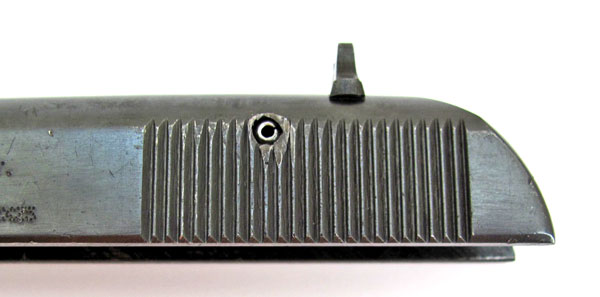
That crude pin can be replaced with a 1/8-inch roll pin as in this example. |
|
|
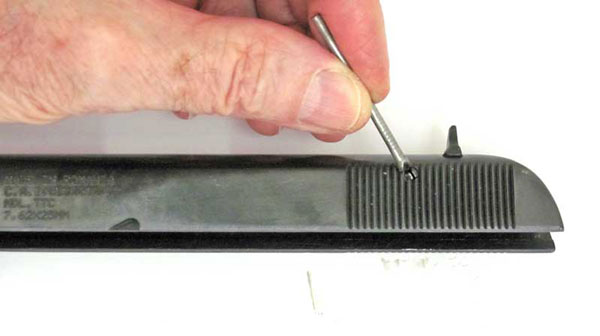
We'll remove this original split pin with the smaller of our special tools. |
|
|
Place the smaller split pin removing tool so that the "V" will compress the sides of the split pin together when it's tapped, and tap it enough to push the head of the split pin down a little into the hole, but not far enough to drive the tool into the hole. |
|
|
Here we can see how the special tool has done its job to get the split head down into the hole. You can see the two sides of the split pin squeezed together, and the shoulder on which the head of the split pin had rested. |
|
|
Then use a small punch to tap the pin out. Be sure the punch is small enough to pass through the hole. |
|
|
When you remove the punch the firing pin and firing pin spring will come out smartly. Keep a finger or a thumb over the end of the slide to avoid eye injury or the trouble of having to go looking for the firing pin and spring. So much for the slide. |
|
|
The hammer, sear, and disconnector are combined in a compact unit that just lifts out. The disconnector presses the trigger bow down to make it pass under the sear when the slide is not in battery. With the slide in battery, the disconnector moves up under the pressure of the trigger spring and lets the trigger bow press the sear. In a few minutes we'll get up our courage and take the hammer group apart. |
|
|
The grips are held on by these clever latches that twist to release the grips. Use a screwdriver or something like that to slide the tab on the left grip toward the rear... |
|
|
like this. Then the left grip will come off. |
|
|
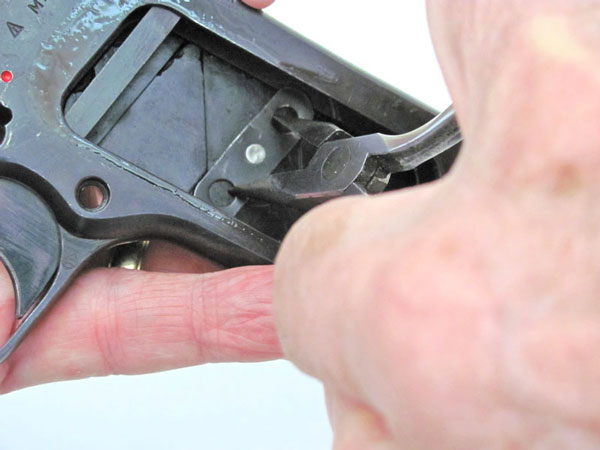
The right grip latch is now visible through the frame. Rotate the latch with the points of a pair of needle-nose pliers to remove the right grip. |
|
|
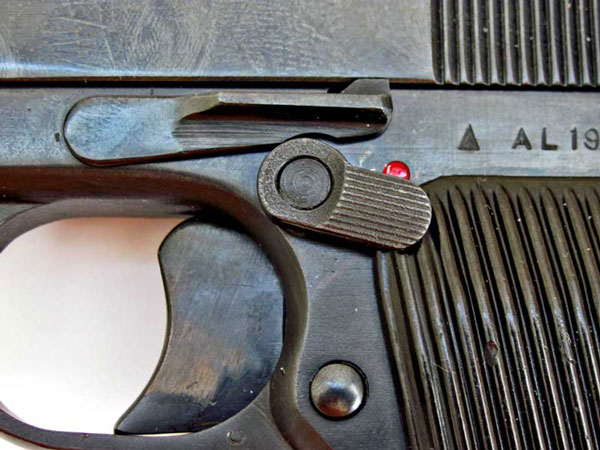
There's always a sloppy, superfluous safety to satisfy stupid import stipulations. This useless safety is not original to the gun, and it doesn't block the hammer or the sear, but only blocks the trigger. |
|
|
Move the slide lock clip to allow the safety to come out... |
|
|
and get it started out by pressing from the right. Avoid letting the detent pin or spring escape. |
|
|
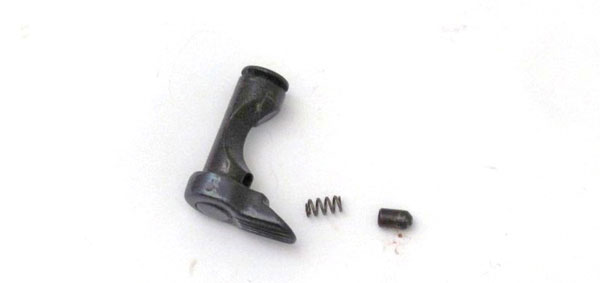
Here's the unpleasant safety with its detent pin and spring. Unaltered Tokarevs without safeties are much more valuable. Commies don't need no stinkin' safeties. |
|
|
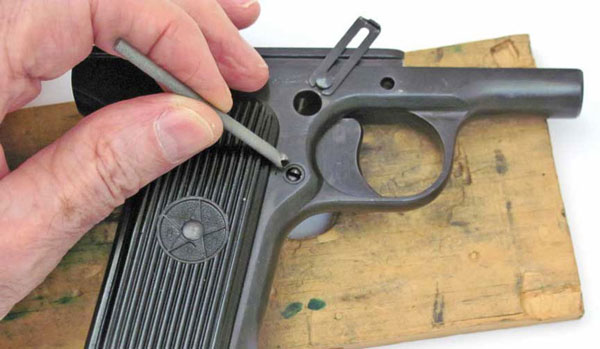
Now it's time to remove the magazine catch. It looks like a good old 1911 magazine catch, but it isn't. What looks like a screwdriver slot is the split end of the magazine release button, which engages in the magazine catch. We'll remove it without damage by using the larger of our special tools made from nails. We begin by aligning the "V" tool so it will compress the sides of the split end of the magazine release together when we tap it. With a nice tap on the split end we start the button on its way... |
|
|
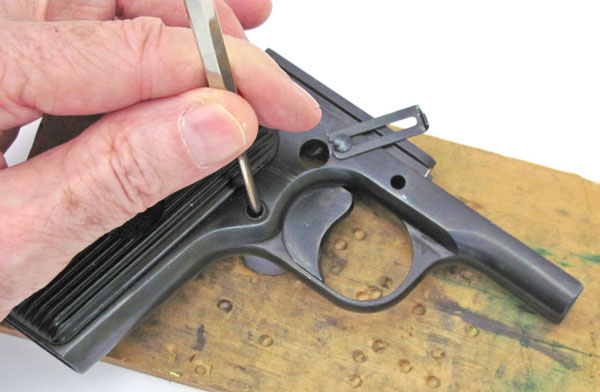
and finish with a smaller punch to lightly tap the button through. |
|
|
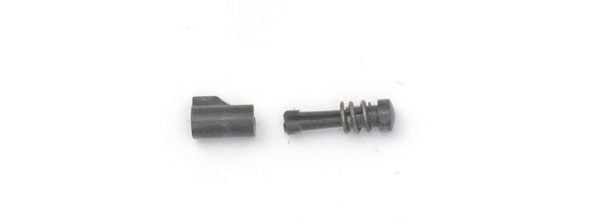
The button with its spring comes out the left side and the catch falls out from the right. You can see the shoulder that held the button in, and you can be happy that you didn't damage it by banging it out with an ordinary punch. |
|
|
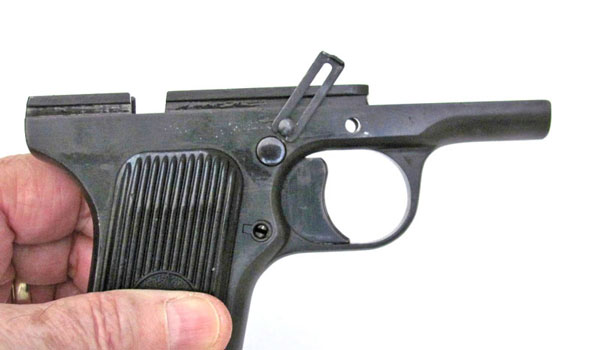
With the safety and the magazine catch out of the way, the trigger will come out... |
|
|
by pushing it back and tipping the bow down. |
|
|
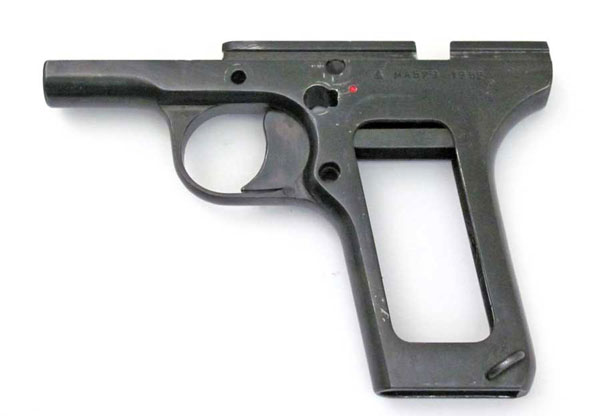
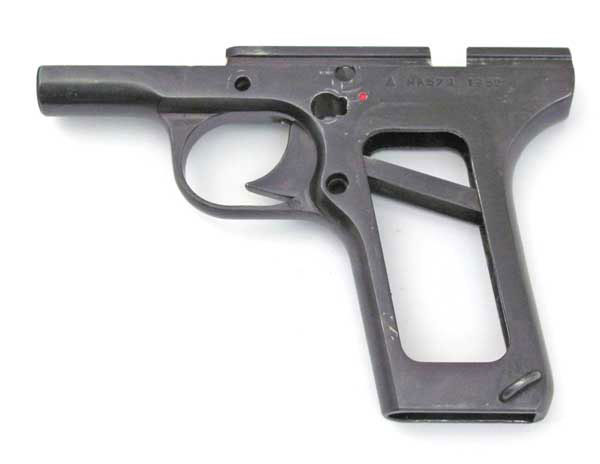
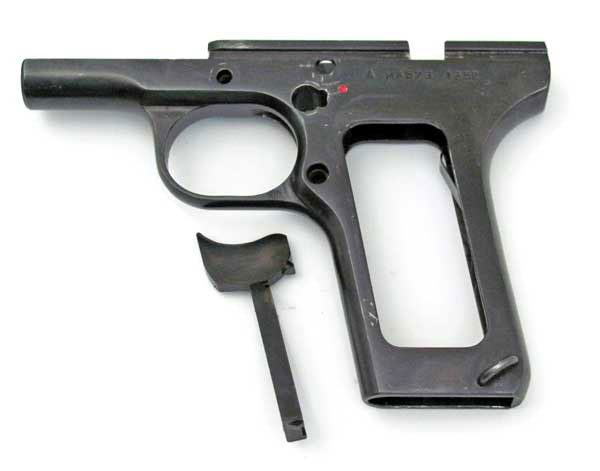
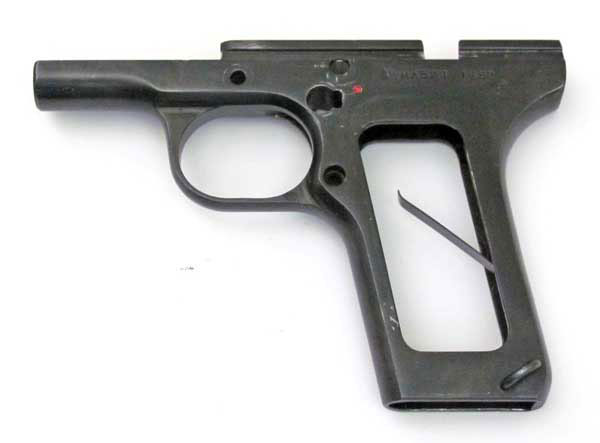
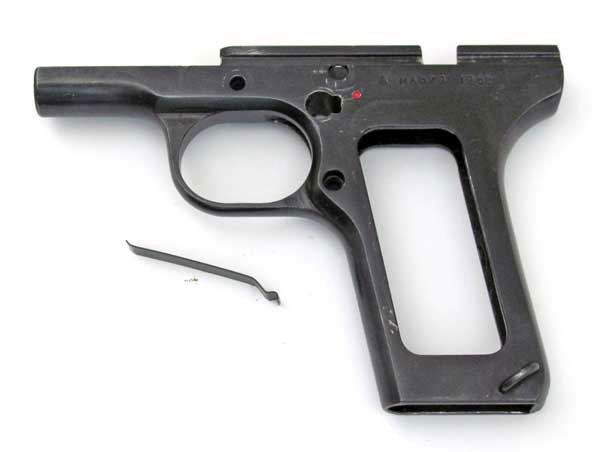
The trigger is machined from a single piece. The projection at the top of the trigger pad is part of the added safety. |
|
|
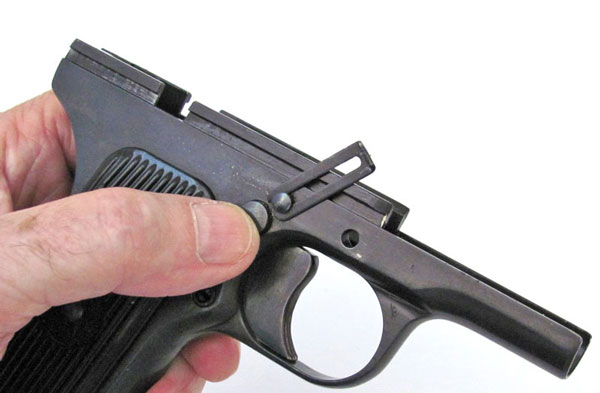
Tip the trigger spring forward... |
|
|
and lift it out from pin that holds it. We don't need to remove the pin. |
|
|
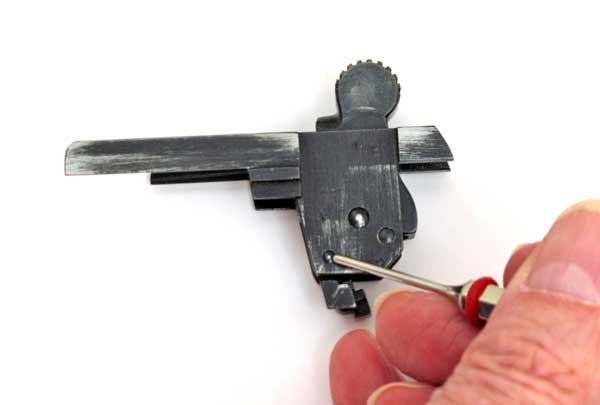
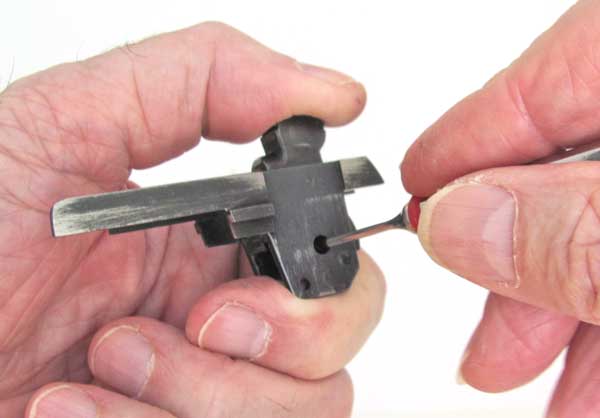
Now the hammer group. First we just push out the sear pin and the sear and disconnector fall out. That was easy. |
|
|
Then, while holding the hammer down we push out the hammer pin. The hammer and its spring fall out.That was easier than we thought it would be. |
|
|
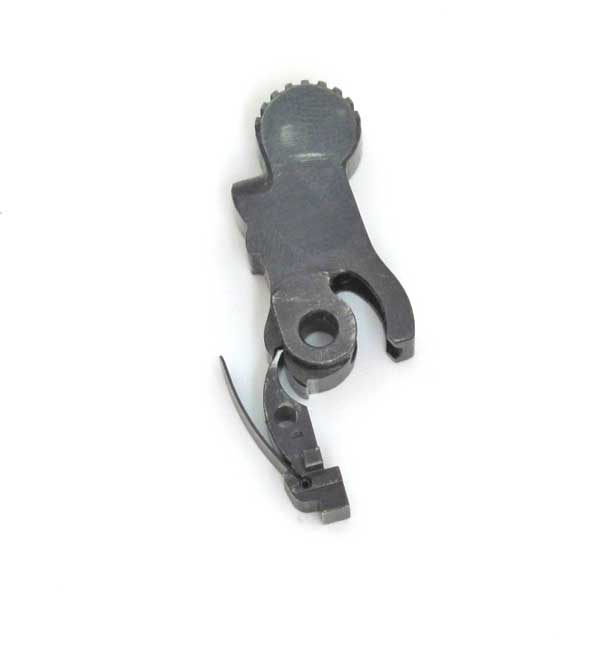
Here are all the parts of the hammer group. |
|
|
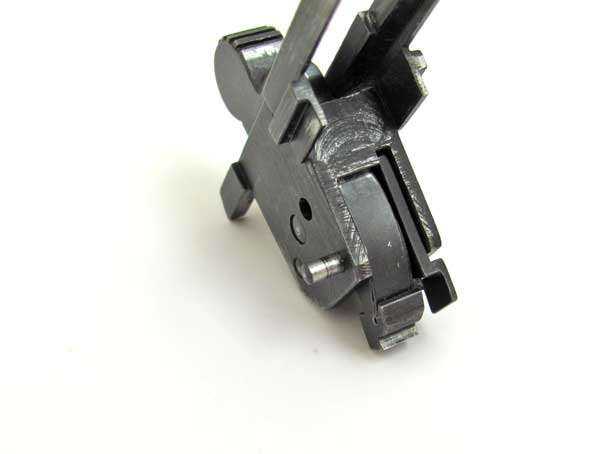
The Tokarev has a sturdy safety notch on the hammer. Interestingly, when the hammer is in the safety notch the slide is locked. The Soviet Union had some clever engineers before the paranoid Stalin killed them all between 1936 and 1938. |
|
|
Reassembly is the reverse of disassembly and is so easy a Russian could do it, except for the hammer part, which might take two Russians. We'll just show a few tricky parts. First, the hammer group. If the old hands aren't as strong as they used to be, then while you press the hammer into place over the stout hammer spring and get the hammer aligned with the hole, your helper puts in the pin. It's tricky because it has to be diddled a bit to get the hammer under the little shelf. You'll see. |
|
|
Then the disconnector, sear, and sear spring go in like this... |
|
|
and the pin holds it all together. |
|
|
Put the tiny extractor spring into its hole and insert the extractor from inside the ejection port. Push it back, and slide in a punch to hold it in place. |
|
|
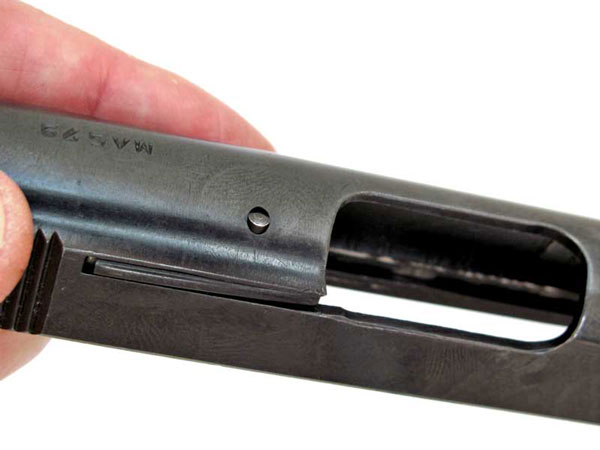
The extractor retaining pin might have a round end and a flat end. The flat end goes in first, from the top. |
|
|
While the punch holds things aligned, tap in the extractor retaining pin. The punch acts as a slave pin, holding the extractor in position while the pin goes in. |
|
|
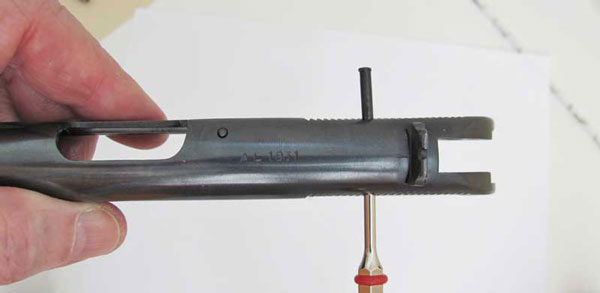
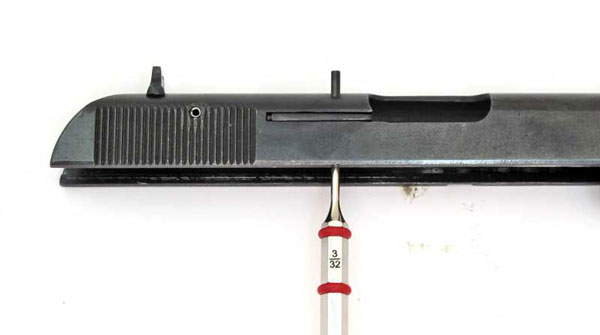
The pin might protrude a bit from the top of the slide, and should extend just to the bottom of its hole, and not into the slide rail. |
|
|
Tap in the firing pin retaining pin just far enough to compress the two sides of the split pin in the hole. Then push in the firing pin and firing pin spring so that the notch in the firing pin is aligned with the retaining pin hole, and slide in a punch to hold the firing pin in place. Then, using the punch as a slave pin, tap the firing pin retaining pin all the way through until it latches on the other side. |
|
|
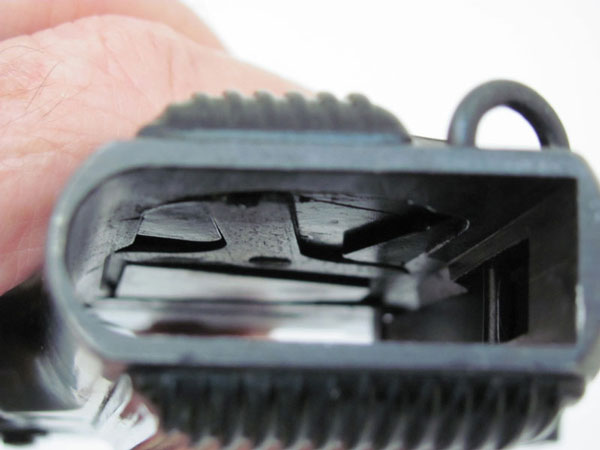
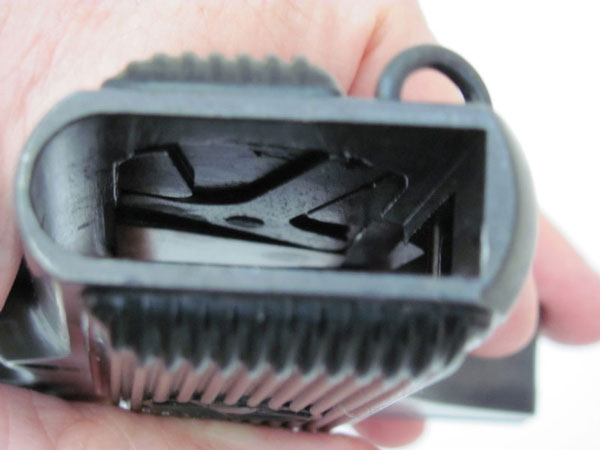
The end of the magazine catch where the split end of the magazine release button goes in is partially milled away to make clearance for the magazine. When the release button is tapped into the catch it just seems right that the split end be aligned like this so it enters in a balanced way. Balance is good, even for Russians. |
Finally it's all back together.

© 2026 Porter Rockwell