|
|
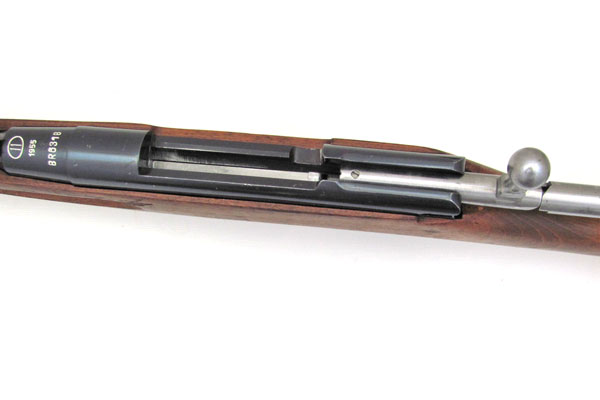
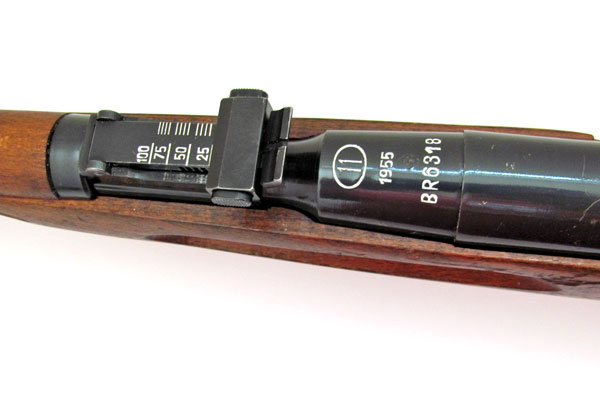
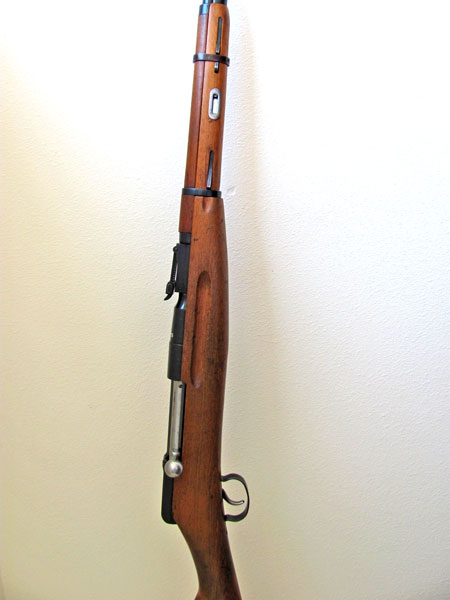
Detailed Disassembly and Reassembly of the Wz-48 Training RifleThe Wz-48 in .22 LR was manufactured from 1948 to 1960 at the Łucznik Arms Factory in Radom, Poland for training use by the Czech and Polish armies. It weighs 8.5 pounds, has a 23-1/8 inch barrel, and is 44-1/4 inches long. It's built after the same pattern as the M-38 carbine, shares the same stock, routed to fit the .22 action, and has the high-quality fit and finish characteristic of Polish manufacture. This example was built in 1955. |
|
|
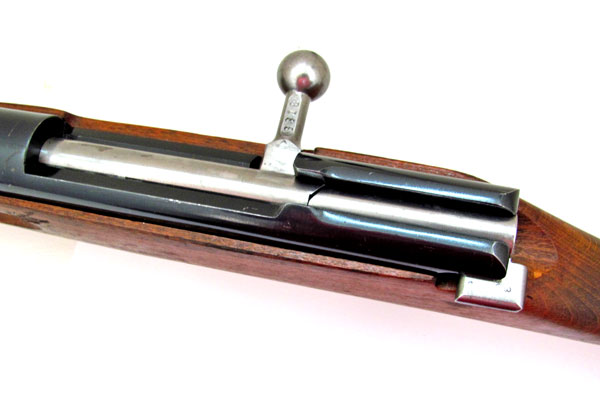
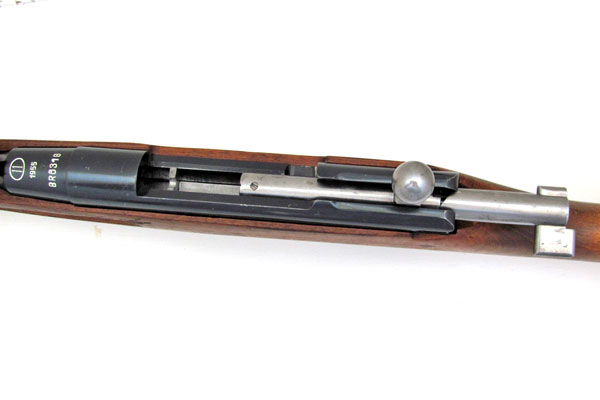
Clear the chamber by opening the bolt. The bolt will not come out with the extractor to the rear as seen here. |
|
|
Slide the bolt forward and then hold the trigger back while you draw the bolt back and all the way out. |
|
|
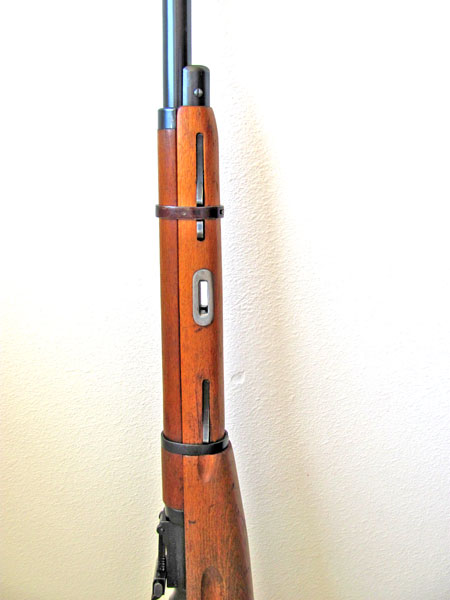
Remove the two barrel bands and the handguard. |
|
|
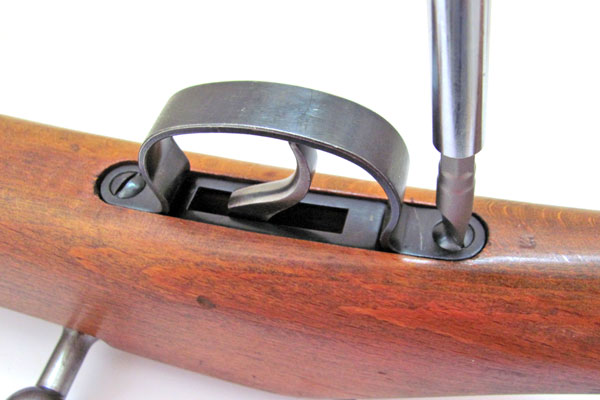
Remove the two screws that hold the trigger guard... |
|
|
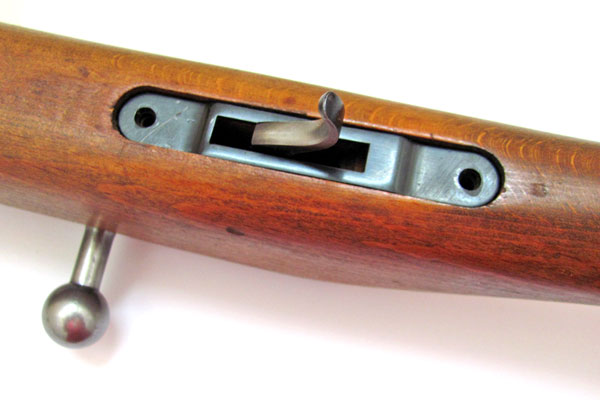
...and lift off the trigger guard and the trigger plate underneath it. |
|
|
Now the rear action screw is visible. |
|
|
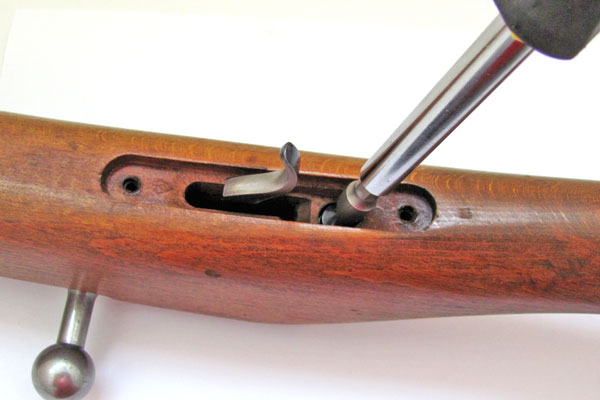
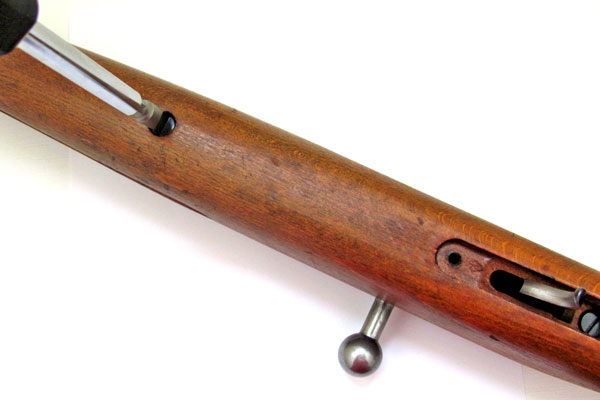
Remove both action screws and separate the action from the stock. Mind the little black washers under the action screws that they don't stick to the stock and then fall off and get lost. |
|
|
The extractor can be removed by pulling the trigger to allow the tab on the rear of the extractor to pass through the slot in the receiver. Slide the extractor all the way to the rear, turn the rifle upside down, pull the trigger, and shake it all around. The extractor will fall out. |
|
|
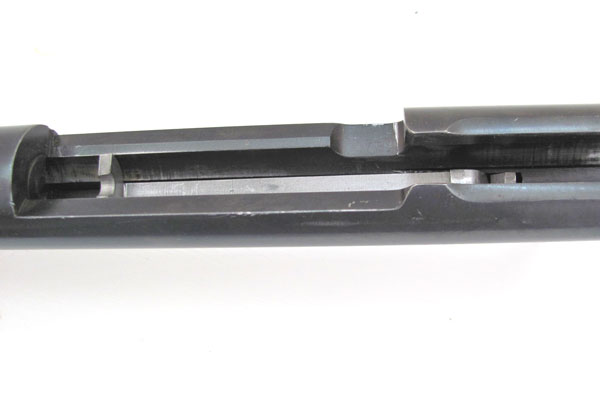
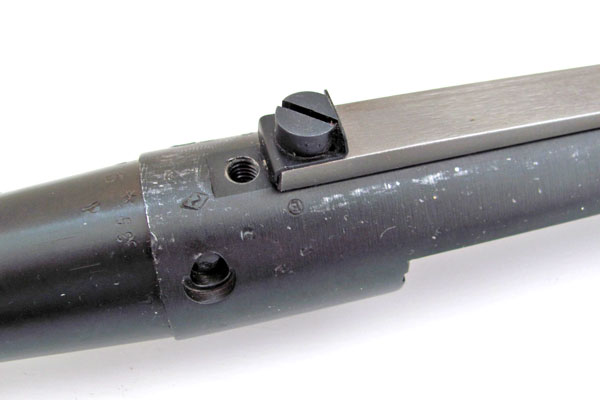
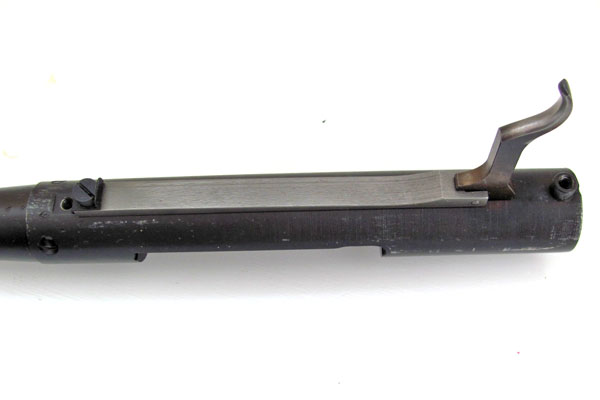
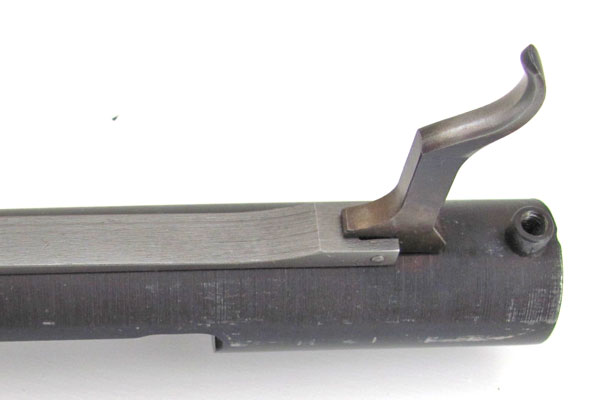
The sear is held in place by a large screw, which is locked in place by a retainer. We'd rather not bend the retainer, so we won't remove the sear. The retainer can't be bent very many times, and it would be unfortunate if it broke. We can see here how the barrel is pinned. That's a bit unusual. |
|
|
If we don't remove the sear then we won't be taking off the trigger either. We just clean it all up the best we can. |
|
|
We could probably remove the trigger by driving out the pin at the rear end of the sear, but we'd rather not. We just make sure everything is nicely centered so there's no unnecessary friction. |
|
|
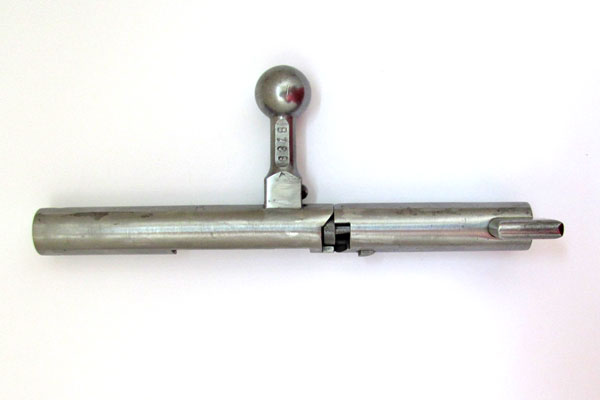
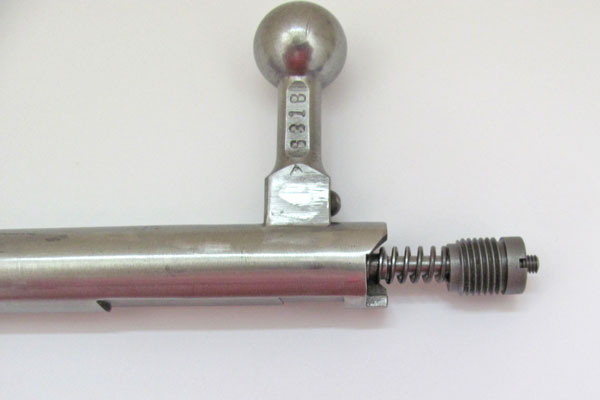
The bolt is in this configuration when it comes out. It can be disassembled either by unscrewing the cocking piece first or by removing the striker nut first. I like to do it this way: |
|
|
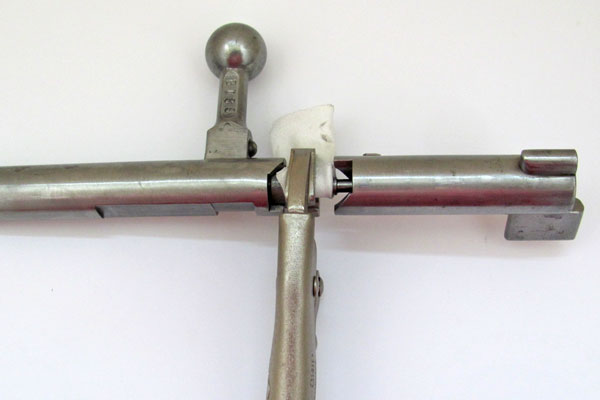
Pull the cocking piece out and grip the striker shaft with padded locking pliers. Then unscrew the cocking piece and remove it. |
|
|
With the cocking piece off we see the slotted striker nut. If this nut works loose during use then you get light strikes, or no strike at all, and it has to be tightened. So it's best if it's moderately tight anyway. If it isn't tight then it can be unscrewed by putting a screwdriver into one of the slots, but if it's tight then that method damages the slot at best. |
|
|
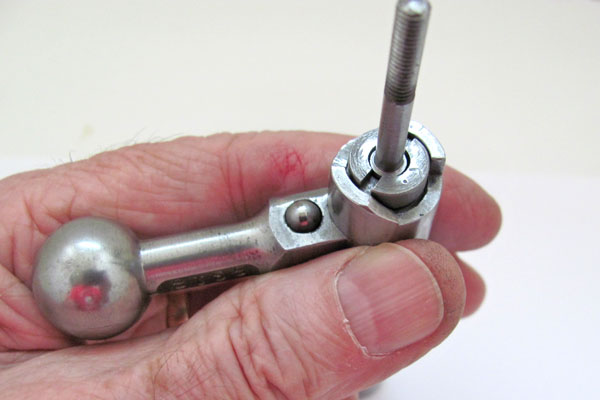
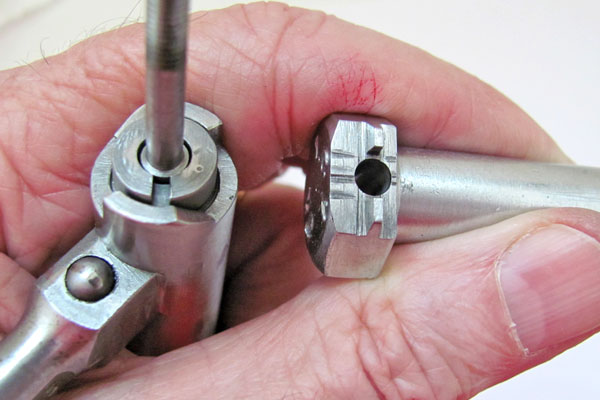
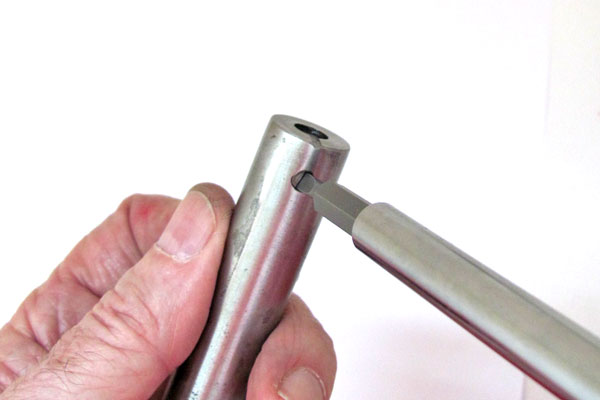
I like a good project, and another tool never hurts, so I made a tool to fit the slots, by drilling and filing the head of a bolt. |
|
|
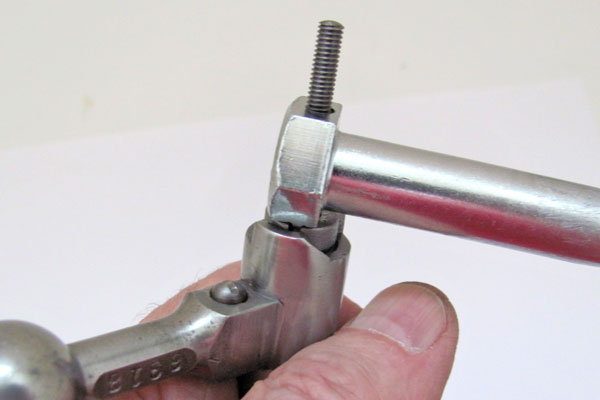
The tool goes over the striker shaft and fits the slots in the striker nut. It came loose with a firm turn. |
|
|
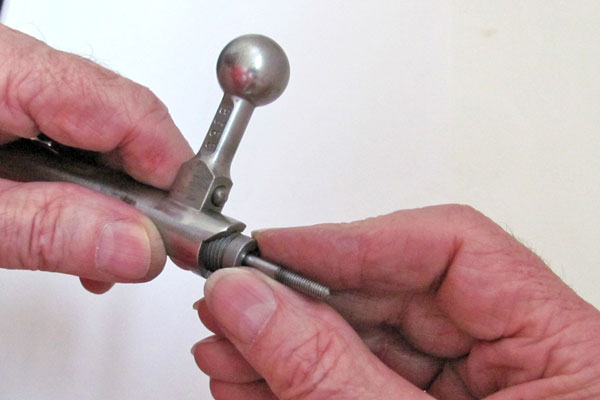
Unscrew the striker nut. |
|
|
And the striker shaft and spring come out. |
|
|
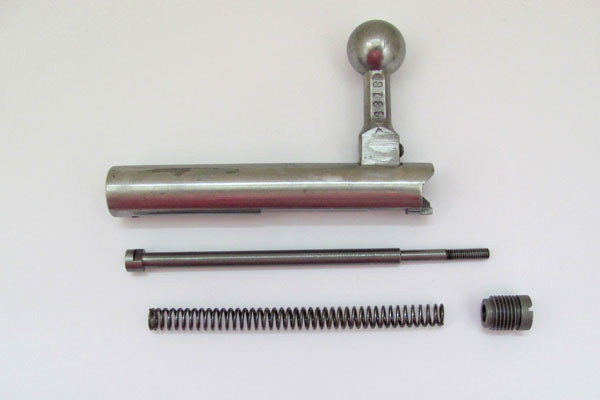
Here we see the bolt body, the striker shaft, the striker spring, and the striker nut. |
|
|
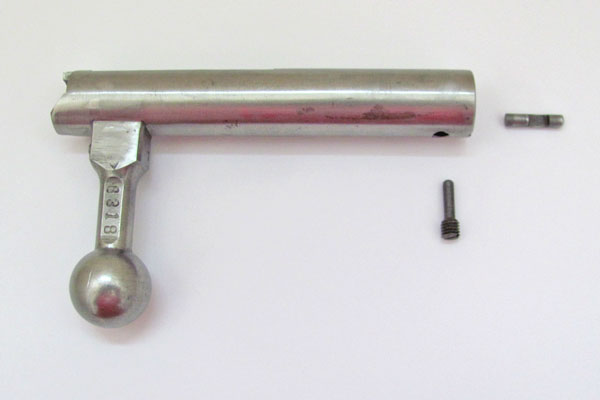
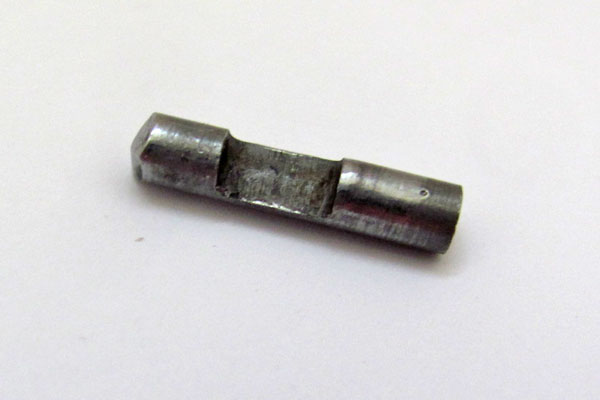
The firing pin is held in by a transverse partly-threaded pin which we remove with a screwdriver. |
|
|
If we're lucky, the firing pin falls out either to the front or the rear. You can see here how it's notched so it will be retained by the transverse pin. In this case the rear end of the notch was peened from dry firing so much that the pin wouldn't move, and it had to be driven into the bolt with a punch; it then fell out the back of the bolt. |
|
|
I fixed the firing pin by lightly hammering out the peened surface there at the rear (right) end of the cutout with a light hammer until the firing pin slipped easily through the hole in the front of the bolt. No filing was needed. |
|
|
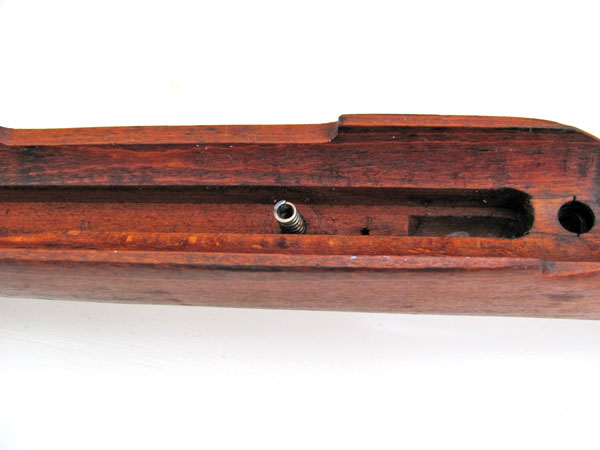
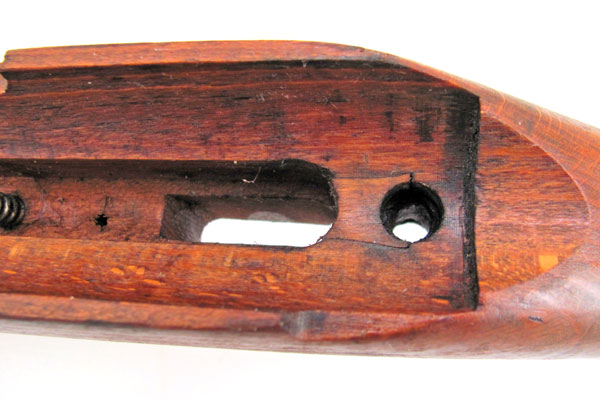
There's a spring in the stock under the sear. It has been suggested that one can lighten the trigger pull by removing this spring. I think that's a very bad idea because it makes the sear more likely to release if the rifle is bumped or dropped. The trigger is light enough anyway. |
|
|
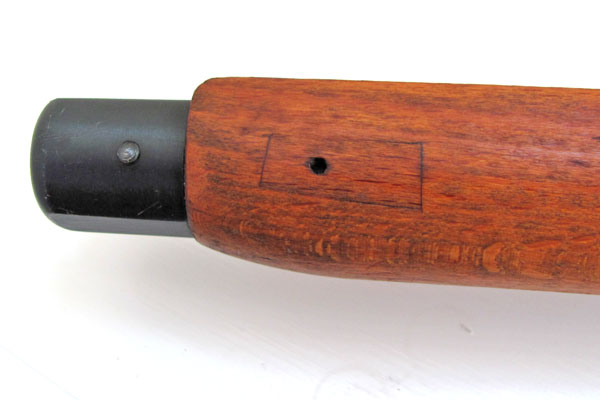
This rifle has an expertly-done repair in the forend... |
|
|
and another just in front of the rear action screw hole. |
|
|
Anything with a circle-11 on it is expertly finished. The Poles had to use copies of all the current Soviet weapons, but they showed their pride by building them far better than the Русские ever did. (Of course Stalin killed all the best Russian engineers, so there's that.) The sight is graduated up to 100 meters, which is reasonable for a .22 rifle. |
|
|
Reassembly is the reverse of disassembly. It's generally a bad idea to dry fire a .22 gun. You can avoid unnecessary and destructive dry firing by holding the trigger back while you close the bolt, to prevent the bolt from cocking. |
© 2026 Porter Rockwell